
Plantain properties: botany, uses, benefits, dosage…
The essentials in 3 points:
-These active ingredients act synergistically to effectively stimulate the body’s immune system
-Helps fight allergies seasonal allergies
-Relieves skin inflammation (insect bites, cuts, scrapes, burns, etc.).
Phytotherapy draws on the benefits of a wide variety of plants to promote the body’s well-being. Among the most popular plants is plantain, a perennial from Eurasia.
Botanical description of common plantain:
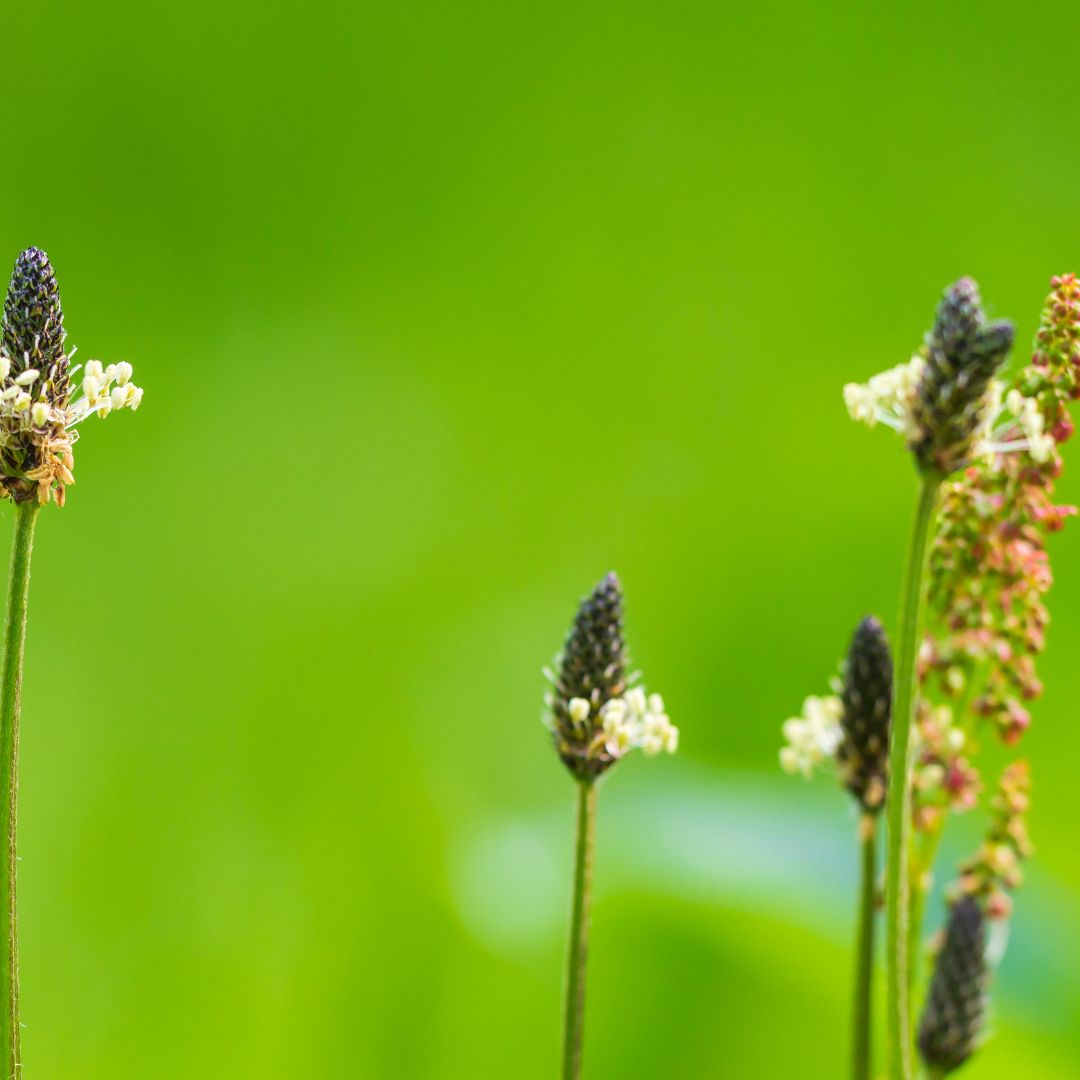
Greater plantain is an easy-to-recognize member of the Plantaginaceae family. Its smooth stem emerges from a bouquet of broad, thick leaves, revealing a floral spike at the tip. Cylindrical in shape, the plantain stem generally measures between 10 and 40 cm. Up to 15 cm long, plantain leaves are thick and stalked. They are deeply veined. The edges are wholly or partially toothed. Unlike the leaves of Rugel plantain, which have a red base, the leaves of greater plantain are entirely green. When the leaves are crumpled, they give off a distinctive mushroom-like scent. Completely hairless, the fruit is hairless and dry. Its oval shape and grayish color make it easy to identify. Between July and September, the greater plantain is adorned with magnificent little greenish-white flowers. Grouped in a cylindrical spike, the flowers each have 4 slender petals, each about 1 mm long. At the base of the petals are 4 thick, oval-shaped green sepals. At the center of each flower are 4 stamens, at the end of which is an anther. The anther is an attractive dark mauve color at the start of flowering.
Long considered a weed, plantain has the ability to adapt to any type of soil and grow anywhere. Nevertheless, this plant is mainly found in uncultivated areas, on the edges of paths and streets. In France, plantain majeur also grows abundantly in uncultivated fields, wooded areas and sidewalk cracks. Plantain majeur seeds can live in the soil for up to 40 years. The plantain is so resistant that other plant species have taken it as a host. This is particularly true of pear psylla and aster yellows.
Plantain uses in phytotherapy:
Various parts of the plant are used in phytotherapy. These include its roots, ripe seeds and fresh juice. The leaves of greater plantain are also useful in phytotherapy. Once harvested, they are dried and processed into powder. These various plant components have the advantage of a formula naturally rich in active compounds. These include tannin, mucilage, pectin and flavonoids. Phosphorus, calcium, iron, sulfur and vitamins A, B, C and K are also present. These active ingredients act synergistically to effectively stimulate the body’s immune system. Various formats of common plantain extracts enable you to benefit from the beneficial actions of the plant’s active ingredients. Today, common plantain is available in the form of syrups, capsules and powders for infusion. They are also sold in the form of dermatological preparations such as lotions, creams and poultice preparations. The choice of format therefore depends entirely on the needs and desires of the user.
Our Plantain products from France-Herboristerie :
Les conseils de nos herboristes
Plongez dans l’univers des plantes et de leurs bienfaits