








Description
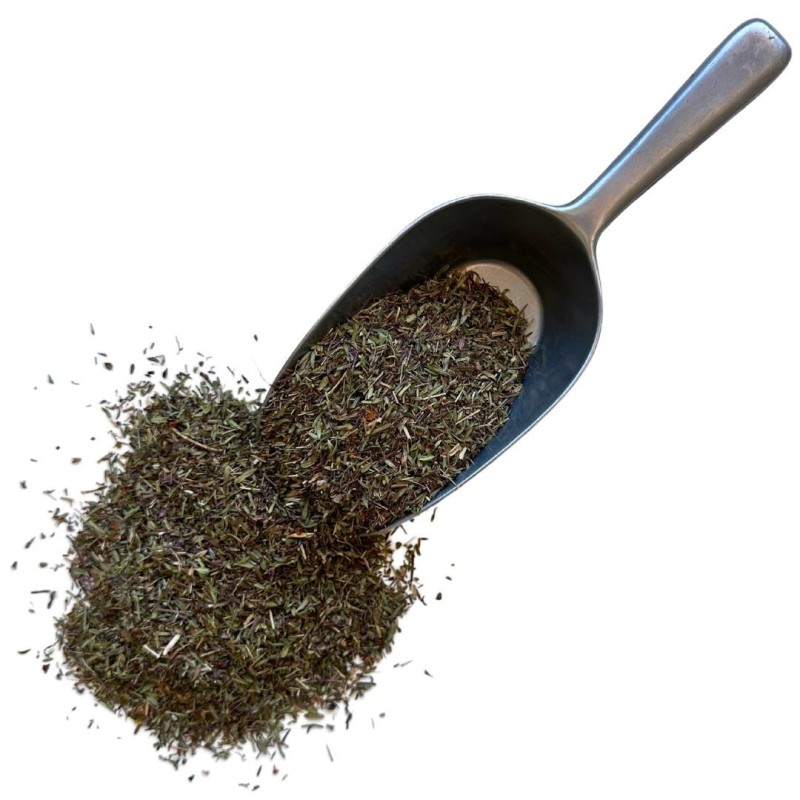
Discover the benefits of serpolet, an aromatic plant with antiseptic properties. Ideal for improving digestion and soothing the airways, this herbal tea is a natural ally for your daily well-being.




 Paiement 100% sécurisé


The serpole helps to clear the airways and purify the body thanks to its antiseptic properties, ideal for general well-being.

Thymus serpyllum, a creeping plant in the mountainous regions of Europe, prefers dry and sunny soils. Its small leaves are very fragrant, and its purple flowers appear in early summer.

Used since ancient times, the serpolet is renowned for its relaxing and digestive properties. This small wild thyme evokes the sunny landscapes of the Midi de la France where it grows abundantly, wrapping the air with a captivating aromatic scent.
Data sheet
Infuse 1-2 teaspoons of serpolet in a cup of boiling water for 10 minutes. Filter and drink after meals to help digest.
Do not use in large quantities during pregnancy. Avoid prolonged use without medical advice.
YES
No specific deadline
The serpole helps to clear the airways and purify the body thanks to its antiseptic properties, ideal for general well-being.
Thymus serpyllum, a creeping plant in the mountainous regions of Europe, prefers dry and sunny soils. Its small leaves are very fragrant, and its purple flowers appear in early summer.
Used since ancient times, the serpolet is renowned for its relaxing and digestive properties. This small wild thyme evokes the sunny landscapes of the Midi de la France where it grows abundantly, wrapping the air with a captivating aromatic scent.
Data sheet
Infuse 1-2 teaspoons of serpolet in a cup of boiling water for 10 minutes. Filter and drink after meals to help digest.
Do not use in large quantities during pregnancy. Avoid prolonged use without medical advice.
YES
No specific deadline
Articles liés : Herbal tea Herbal tea Thymus serpyllum.
S’il y a un arbre dont la carrure et l’élégance impressionnent, c’est bien le lapacho. Originaire d’Amérique du Sud,...
Lire l'article
Si le thym de Provence est utilisé en cuisine, son utilisation en phytothérapie n’est pas très commune. Pourtant, cet...
Lire l'article
Le quinquina est un arbuste de la famille des Rubiacées dont la réputation n’est plus à faire. Il est en effet...
Lire l'article
Enjoy the benefits of serpolet with our 100 GRS tea.
